Sonar Transducer Mount FAQ & Fitment Guide
Looking for the right transducer mount for your Garmin, Lowrance or Humminbird sonar system? This guide answers common questions about transom mounts, jackplate mounts, trolling motor mounts, forward-facing sonar, transducer angle, fitment and installation. RyTek Marine designs and manufactures sonar mounting solutions for a wide range of fishing electronics and boat setups.
Choosing the Right Transducer Mount
What transducer mount do I need for my fish finder?
The correct transducer mount depends on the sonar brand, exact transducer model, boat setup and where you want the transducer installed.
RyTek Marine manufactures mounts for a wide range of Garmin, Lowrance and Humminbird transducers, including transom mounts, jackplate mounts, flush mounts, trolling motor mounts and forward-facing sonar systems.
The easiest way to choose the right mount is to identify your fish finder brand, exact transducer model, where you want it mounted and your trolling motor model if applicable.
If you are unsure which RyTek mount fits your setup, contact us with your sonar and boat information and we can help point you in the right direction.
What is the difference between a transom mount, jackplate mount and flush mount?
A transom mount attaches the transducer directly to the back of the boat’s transom. A transom-mounted transducer will typically be used when high-speed, “on-plane” sonar readings are required.
A jackplate mount attaches the transducer to the engine jackplate instead of directly to the transom.
A flush mount positions the transducer tight to the bottom of the hull, usually under a step, for a cleaner, lower-profile installation.
Jackplate mounts and flush mounts are generally not intended for high-speed sonar readings because the transducer is typically out of the water, or not in clean water flow, while the boat is on plane.
Jackplate mounts are popular with anglers who want to avoid drilling additional holes in the transom, while flush mounts can be a good option when space is limited or when a clean, tucked-in installation is preferred.
The best option depends on your boat, motor, jackplate, transducer and whether you need high-speed sonar readings while on plane.
Why does transducer angle matter?
A transducer needs to be positioned at the correct angle for the type of fishing you do most often.
Before leveling a transducer, think about how the boat normally sits in the water during the way you fish. A typical bass fisherman may need a different transducer angle than someone who spends most of their time trolling.
For example, someone sitting still and casting, or fishing from the bow while slowly moving along a shoreline with the trolling motor, will usually have a different boat attitude than someone trolling at 2–3 mph while standing farther back in the boat with one or two other people onboard.
A simple way to picture this is to think of a teeter-totter. The rear of the boat around the transom acts somewhat like the pivot point. As power is applied and the bow rises, the stern and transom settle deeper into the water and the angle of the boat changes. Since most transducers are mounted at or near the transom, the transducer angle changes right along with the boat.
That is why the goal is not simply to make the transducer perfectly level while the boat is sitting on the trailer. The goal is to have the transducer as close as possible to parallel with the water surface during the type of fishing or running condition you use most often.
If you are using a transducer capable of high-speed readings, such as an Airmar TM150 or TM165 with one of our RTA1000 or RTA1400 mounts, you would want to set the transducer angle so it is as close as possible to parallel with the water surface at the speed you normally run while searching for fish.
Boat speed, load, fuel level and where people are positioned can all change the running angle of the boat. That means a transducer that looks perfectly level at rest may be several degrees off once the boat is actually being used.
For side imaging or forward-facing sonar, even a small amount of tilt can change how the sonar image appears and make targets look uneven, distorted or harder to interpret.
The correct setup depends on how you fish, where you sit or stand in the boat, your normal operating speed, your transducer and what type of sonar performance you are trying to achieve.
Can one transducer mount work for every boat?
No. The correct mount depends on the transducer, boat hull, engine setup, jackplate, trolling motor and how the sonar will be used.
A mount that works perfectly on one boat may not be the best choice on another because the transducer can sit in a different position relative to the hull, water flow or trolling motor shaft.
RyTek Marine offers a wide range of transducer mounts and accessories so the mounting solution can be matched more closely to the actual boat and sonar setup instead of relying on a one-size-fits-all approach.
If you’re unsure which mount is right for your setup, contact RyTek Marine with your transducer model and boat information and we will gladly walk you through the process of selecting the proper mount for your application.
Garmin, Lowrance & Humminbird / Minn Kota Compatibility
What forward-facing sonar transducers work with the RyTek Marine 3600 Series?
RyTek Marine 3600 Series Live Sonar mounts are designed to work with a wide range of current forward-facing sonar transducers, including:
- Garmin LiveScope LVS32, LVS34 and LVS62
- Lowrance ActiveTarget 1 / ActiveTarget 2
- Lowrance ActiveTarget XL
- Humminbird MEGA Live 1 and MEGA Live 2
Simply select your corresponding transducer along with the mounting application that best matches your boat or trolling motor setup.
The 3600 Series is available in a large number of configurations, and we also have additional mounting components and compatibility options that are not always listed individually on the website. Because of that, we can often put together a custom solution for almost any forward-facing sonar installation.
If you have a specific mounting setup in mind and don’t see it listed, contact RyTek Marine with your transducer model, trolling motor and a photo or description of how you would like it mounted. We will gladly help put together the proper setup for your application.
Do RyTek Marine 3600 Series mounts work with different trolling motors, turrets and poles?
RyTek Marine 3600 Series mounts are available with an extremely wide range of mounting options for trolling motors, live sonar turrets and mounting poles, including many OEM and aftermarket systems.
With the number of interchangeable components and configurations available, RyTek Marine can currently outfit almost any forward-facing sonar mounting application on the market today.
The exact setup depends on the shaft or pole diameter, whether the shaft slides or stays fixed, the transducer being used and how you want the sonar positioned.
Because there are so many different trolling motors, turrets and poles available, not every possible combination is listed individually on the website.
If you are unsure which configuration you need, contact RyTek Marine with your transducer model, trolling motor / turret / pole information and a photo of your setup, and we will gladly help determine the proper mounting combination.
Installation, Adjustment & Sonar Performance
Can I adjust a RyTek Marine transducer mount without tools?
Many RyTek Marine mounts are designed to be tool-free after the initial setup.
Once the mount has been installed and adjusted for your boat, anglers can typically make day-to-day changes without needing to reach for tools.
This is especially useful with the 3600 Series Live Sonar mounts, where you may want to quickly change the transducer position for different viewing modes or fishing situations.
Depending on the specific mount and application, RyTek designs can allow fast angle changes, view changes and positioning adjustments while you are on the water.
The goal is to make the sonar system easier to use so you can spend less time adjusting hardware and more time fishing.
How often should I check my transducer angle and mounting position?
You shouldn’t need to constantly readjust a properly installed transducer mount, but it is a good idea to check the angle and mounting position any time something changes with the boat or sonar setup.
Changes in battery location, added gear, fuel load, trolling motor setup or even how many people are normally in the boat can affect how the boat sits and runs in the water.
It is also worth rechecking the transducer after hitting debris, trailering long distances, changing the mount position or noticing a change in sonar image quality.
For anglers who rely heavily on side imaging, forward-facing sonar or high-speed 2D sonar, small changes in transducer angle can make a noticeable difference in performance
How easy is it to change between Forward, Down and Scout-style views?
With the RyTek Marine 3600 Series Live Sonar mounts, changing between different viewing positions is designed to be quick and simple once the mount has been initially set up.
The mounts include labeled reference positions for common sonar views such as Forward, Down and Perspective / Scout / Landscape, but you are not limited to using the transducer at those exact angles.
The reference marks simply give you a starting point.
You can angle the transducer farther downward when fishing deeper water, or pull it upward when fishing shallow water. Even while using Forward view, you may want to tilt the transducer deeper if you are targeting suspended fish or fish holding closer to the bottom.
That flexibility can also increase the amount of water you are able to see behind and beneath the boat. In some situations, especially when fishing with another person at the opposite end of the boat, you may even be able to see their lure and fish beneath them while still using a forward-facing setup.
Because many of the day-to-day adjustments are tool-free after the initial setup, anglers can quickly fine-tune the viewing angle as depth, structure and fishing conditions change.
Can transducer mounting position affect sonar interference or image quality?
Yes. Transducer mounting position can have a major effect on sonar performance.
A transducer needs clean, uninterrupted water flow and a clear field of view. If it is mounted too close to the propeller, strakes, steps, rivets, hull features or other equipment, turbulence and aerated water can reduce image quality or cause the sonar to lose bottom at speed.
With side imaging, the transducer also needs a clear path to both sides of the boat. A motor, jackplate, hull step or other obstruction can block part of the sonar beam and create shadows or missing information on the screen.
Forward-facing sonar can also be affected by where the transducer is positioned in relation to the trolling motor, turret or mounting pole. Mounting location, shaft position and cable routing can all influence how clean and easy the system is to use.
The best mounting location depends on the boat, transducer and how the sonar will be used. If you are unsure where to position your transducer, contact RyTek Marine and we will gladly help you work through the setup.
Why does my transducer lose bottom or sonar quality at higher speeds?
A transducer can lose bottom or show poor sonar quality at higher speeds when it is no longer running in clean, solid water.
As boat speed increases, water coming off the hull can become turbulent or aerated. Strakes, steps, rivets, chines, jackplates and other hull features can introduce bubbles or disturbed water around the transducer. When that happens, the sonar signal has a harder time traveling cleanly through the water and returning a strong reading.
The transducer mounting height and angle also matter. A transducer mounted too high may come partially out of the water while the boat is on plane, while one mounted too low can create excess spray, drag or turbulence.
For anglers who rely on high-speed 2D sonar to search for fish, proper setup becomes especially important. RyTek Marine has many customers running larger walleye-style boats who are able to do much more than simply maintain a bottom reading at WOT (Wide Open Throttle). With the proper setup, they are also able to mark both bait and game fish at speeds of 50+ mph.
The key is the combination of proper transducer angle, correct mounting height and clean water flow, along with a high-powered aftermarket transducer such as those in the Airmar lineup.
When everything is set up properly, high-speed sonar can become a very effective search tool instead of something you only use once you slow down. That means you can keep searching while you are covering water instead of driving past fish and only finding them after you stop.
The goal is to keep the transducer in clean water and as close as possible to the proper running angle for the speed at which you normally search for fish.
If you are having trouble maintaining bottom or marking fish at speed, RyTek Marine can help you work through transducer position, mounting height and angle to improve performance.
How can I tell if my transducer is mounted too high or too low?
A transducer mounted too high may lose contact with clean water as the boat speeds up, causing intermittent readings, loss of bottom or poor target definition.
A transducer mounted too low can create excessive spray, drag or turbulence and may be more exposed to impact from debris or underwater obstacles.
The ideal height depends on the hull, transducer, mounting location and the way the boat is normally used. Small adjustments can make a noticeable difference, especially for high-speed sonar performance.
When making a height adjustment, it is also very common to need a slight angle adjustment at the same time. Changing one can affect the other, which is why fine-tuning a transducer setup is often a process of making small changes and testing the results.
This is where the infinite adjustability of RyTek Marine Stainless Series of Transom Mounts can make the process much faster and easier. Instead of being limited to a few fixed positions, the mount allows very small angle changes so the transducer can be fine-tuned for the boat and the way it is being used.
In many cases, once the mount has been initially set up, the transducer angle can even be adjusted tool-free by simply bumping the transducer slightly up or down. The large stainless single through-bolt and stainless pinch-tube design allow the mount to hold securely while still making those small adjustments easy.
If you are unsure about the mounting height or angle on your setup, contact RyTek Marine with a photo of the transom and transducer location and we can help you work through the adjustment.
How does RyTek Marine protect and route the transducer cable?
Proper cable management is an important part of any transducer installation. A poorly routed cable can become pinched, kinked, rubbed against the mount or damaged over time.
RyTek Marine’s Stainless Series transom mounts use a built-in grommet system that helps protect the transducer cable as it passes through the mount. The grommet helps prevent the cable from being pinched or kinked and reduces the chance of the cable chafing against the stainless mount.
Because the cable is routed through the built-in grommet system, there is also no need to simply zip-tie the cable to the outside edge of the mount, where it can be pulled tight, bent sharply or damaged.
Our Flush Mount Series uses a built-in wiring chase that allows the transducer cable to be routed smoothly through the mount itself. The cable exits cleanly from the rear of the mount and can then be routed upward and out of the water.
The goal with both systems is the same: protect the transducer cable, reduce unnecessary bends and abrasion, and create a cleaner installation.
Can cable routing affect transducer performance or reliability?
Yes. Even when the transducer itself is mounted correctly, poor cable routing can create problems over time.
Sharp bends, repeated flexing, cable pinch points and abrasion can damage the outer jacket or internal conductors. In some installations, routing the cable too tightly around the mount or fastening it too aggressively with zip ties can also create unnecessary stress.
The cable should be supported, protected and allowed to move naturally where needed without being stretched, crushed or rubbed against sharp edges.
RyTek Marine designs cable management into many of our mounts to help reduce these issues and make the installation cleaner and easier to maintain.
Forward-Facing Sonar Tips & Applications
How should I aim my forward-facing sonar transducer?
Forward-facing sonar works best when the transducer is aimed for the depth and type of fishing you are doing, not just left at one fixed angle all day.
With RyTek Marine 3600 Series mounts, the labeled positions for Forward, Down and Perspective / Scout / Landscape are reference points, not limits. Once the mount is set up, you can fine-tune the transducer above or below those marks depending on the water depth, target location and how far ahead or behind the boat you want to see.
In shallow water, you may want to tilt the transducer slightly upward to spread your view farther ahead. In deeper water, tilting it farther downward can help focus more of the sonar beam toward suspended fish, bottom structure or fish holding deeper in the water column.
Even while using Forward view, you may choose to point the transducer deeper than the standard reference position. This can help you see more water beneath and behind the boat and, in some situations, even track a lure or fish being worked by someone at the opposite end of the boat.
The best angle is the one that shows you the water you actually want to fish.
How does water depth change the best forward-facing sonar angle?
The ideal forward-facing sonar angle changes with water depth. The factory Forward, Down and Perspective / Scout / Landscape positions are useful starting points, but they are not necessarily the best angle for every fishing situation.
A simple way to understand this is to think of the sonar beam like a flashlight shining onto the lake bottom.
In shallow water, a factory Perspective / Scout / Landscape angle may only illuminate a very small section of bottom. By tilting the transducer upward, the sonar beam contacts a larger area of the lake bottom, increasing the amount of usable coverage and creating better contrast between the bottom, structure and fish.
In deeper water, the opposite can happen. The beam may cover too large an area of bottom, causing the image to become stretched out or less defined. Tilting the transducer farther downward shortens that contact area and can produce a clearer, more detailed image.
Want to see this in action? Watch our YouTube video on perfecting Scout, Perspective and Landscape views with the RyTek Marine 3600 Series.
This ability to fine-tune the angle is one of the biggest advantages of the RyTek Marine 3600 Series. Instead of being limited to fixed ratcheting positions, the mount allows you to continuously adjust the transducer angle to match the actual depth and fishing conditions.
The same principle applies in Forward view. You do not have to aim the transducer exactly where Garmin, Lowrance or Humminbird intended. If you are fishing deeper water for suspended walleye, smallmouth bass or fish holding close to the bottom, angling the transducer farther downward can put more of the sonar beam where the fish actually are.
It can also increase the amount of water visible beneath and behind the boat, sometimes allowing you to see fish — or even your fishing partner’s lure — at the opposite end of the boat.
The marked positions on the 3600 Series are reference points. The best angle is the one that lets you see the water you are actually trying to fish.
Why is infinite adjustability important on a forward-facing sonar mount?
Factory forward-facing sonar brackets and many aftermarket mounts use fixed serrations or ratcheting positions. That can limit the transducer to fairly large angle changes instead of letting you fine-tune it for the exact depth and fishing situation.
The RyTek Marine 3600 Series is designed with infinite angle adjustment, allowing much smaller changes in transducer position.
That becomes especially important in Perspective, Scout and Landscape-style views, where even a small change in angle can make a big difference in how much of the lake bottom the sonar beam covers and how clearly fish, structure and suspended targets show up.
Instead of being locked into a few preset positions, you can adjust the transducer to match the depth, target location and type of fishing you are doing.
The result is a much more flexible setup that can be fine-tuned throughout the day as conditions change.
What do the angle and mode indicators on the RyTek Marine 3600 Series do?
The RyTek Marine 3600 Series includes built-in angle and mode indicators so you can quickly see how the transducer is positioned without guessing.
The labeled positions give you easy reference points for common sonar views such as Forward, Down and Perspective / Scout / Landscape. They make it simple to return to a familiar setup after changing views or adjusting the transducer angle.
Because the mount is infinitely adjustable, the indicators are not fixed locking points. They are reference marks that help you keep track of where the transducer is aimed while still allowing you to fine-tune the angle between those positions.
This is especially useful when switching between different depths or fishing styles throughout the day. You can make a small adjustment, note where the indicator is positioned, and easily return to that same angle later.
How quickly can I switch between Forward, Down and Perspective / Scout / Landscape views?
With the RyTek Marine 3600 Series, changing between common forward-facing sonar views is designed to be quick and simple.
The transducer stays solidly mounted to the system, while the mount itself handles the adjustment. To move between Forward / Down and the third-view position such as Perspective, Scout or Landscape, the mount can be repositioned quickly without removing the transducer or completely reworking the setup.
Once the initial tension has been set, these day-to-day changes are typically tool-free.
That makes it easy to switch views as fishing conditions change without wasting time adjusting hardware.
The 3600 Series was designed so anglers can spend more time using the sonar and less time fighting with the mount.
Why is my 3600 Series transducer pointing the wrong direction or not moving into Perspective / Scout / Landscape view?
On the RyTek Marine 3600 Series, the third viewing position is reached using a simple “Pull, Twist, Release” motion.
If the transducer appears to be pointing the wrong direction or will not move into Perspective, Scout or Landscape view, the mount usually just needs to be rotated into the proper 90-degree position.
Simply:
Pull the mount outward,
Twist it 90 degrees,
then Release it so it drops back into place.
That allows the mount to clock the transducer into the correct third-view position without removing the transducer or changing the entire setup.
Once you are familiar with the motion, switching into the third function becomes quick and easy.
Do I need to use the factory-recommended angle for Forward, Down or Perspective / Scout / Landscape?
No. The factory-recommended positions are useful starting points, but they are not always the best angle for every depth, species or fishing situation.
The RyTek Marine 3600 Series gives you the freedom to fine-tune the transducer beyond those reference positions. You may want to aim farther downward in deeper water, raise the beam in shallow water, or adjust Forward view to concentrate more of the sonar coverage around suspended fish or fish holding closer to bottom.
The best setting is the one that gives you the clearest picture of the water you are actually trying to fish.
I already own a 3600 Series mount but I’m changing transducers. Do I need to buy a whole new mount?
No. In most cases, you can keep the main 3600 Series mount body and simply change the transducer-specific components.
RyTek Marine offers 3600 Series Model Swap Kits that allow you to convert your existing mount to work with a different compatible transducer model or manufacturer.
Depending on the conversion, the kit may include a different transducer adapter, decals and other transducer-specific components while allowing you to reuse the main mount body you already own.
That means if you decide to move from one forward-facing sonar system to another, you may not need to replace your entire 3600 Series mount.
View the 3600 Series Model Swap Kits here
Product Selection & Custom Mounting
What if I don’t see my exact transducer, trolling motor, turret or pole combination listed on the website?
Not every compatible combination is listed individually on the RyTek Marine website.
The 3600 Series uses a large number of interchangeable components, adapters and mounting options, which means we can often put together a solution for applications that are not shown online.
RyTek Marine currently supports a wide range of transducers, trolling motors, live sonar turrets and mounting poles from both OEM and aftermarket manufacturers.
If you do not see your exact combination listed, contact RyTek Marine with your transducer model, trolling motor / turret / pole information and a photo of your setup. In many cases, we can configure a mounting solution using components already available within the 3600 Series system.
Can RyTek Marine help me choose the right mount before I order?
Absolutely. With the number of transducers, trolling motors, turrets, poles and mounting locations available today, it is not always obvious which setup will work best.
If you are unsure what you need, contact RyTek Marine before ordering with your transducer model, trolling motor / turret / pole information, boat information and a photo of the area where you want to mount it.
We can help work through the different options and recommend the setup that best matches your application.
In many cases, a quick photo or two of the boat and mounting area is enough to identify the best solution and avoid ordering parts that may not be required.
Can RyTek Marine build a custom mounting solution for my setup?
In many cases, yes.
Because the RyTek Marine 3600 Series uses a large range of interchangeable components, adapters and mounting hardware, we can often combine existing parts to create a solution for applications that are not specifically listed on the website.
That can include unusual combinations of forward-facing sonar transducers, trolling motors, turrets, mounting poles or other custom installations.
Before fabricating something completely new, we first look at the components already available within the RyTek system. Quite often, the solution is simply a different combination of parts that already exist.
If you have an unusual application, send RyTek Marine photos of your setup along with the transducer and mounting information. We will gladly look it over and see what options are available.
Are RyTek Marine mounts designed for saltwater use?
Yes. RyTek Marine mounts are well suited for saltwater use, but like any equipment exposed to a saltwater marine environment, regular rinsing and maintenance are recommended.
Our Stainless Series and Flush Mount Series are especially well suited for saltwater because they are built from corrosion-resistant materials and do not rely on painted or coated finishes that can chip or wear away.
The 3600 Series is built primarily from aluminum and uses a hard-anodized finish to help protect the components from corrosion and harsh marine conditions.
After use in saltwater, it is always a good idea to rinse or flush the mount with fresh water to remove salt residue and help prevent buildup over time.
For 3600 Series mounts that see frequent use or operate in harsh conditions such as saltwater, dirty water or high-mineral-content water, periodic maintenance is also recommended. Flushing and cleaning the mount and re-greasing the lower third-function joint can help keep the system operating smoothly and prevent buildup inside the moving components.
Regular maintenance is simple and can go a long way toward keeping the mount working properly for years.
How should I maintain my RyTek Marine mount?
For most RyTek Marine mounts, maintenance is very simple.
Periodically inspect the mount for loose hardware, cable wear, corrosion or debris buildup, especially if the boat is used frequently or in harsh conditions.
For the Stainless Series and Flush Mount Series, rinsing with fresh water after saltwater use and keeping the mounting area clean is generally all that is required.
For the 3600 Series, it is also a good idea to periodically flush and clean the moving components and re-grease the lower third-function joint, especially when the mount is used in saltwater, dirty water or areas with high mineral content.
A small amount of preventative maintenance can help keep the mount operating smoothly and extend the life of the components.
Are RyTek Marine mounts built in Canada?
Yes. RyTek Marine mounts are designed and manufactured in Southern Ontario, Canada.
RyTek Marine is a small, one-man shop, and the mounts are built using a combination of in-house machining, forming, fabrication and assembly along with locally sourced processes and components where practical.
What started as a solution to a mounting problem on one boat has grown into a large lineup of sonar mounts and accessories used by anglers around the world.
Every product is designed around real-world fishing use, with a focus on strength, adjustability, serviceability and making sonar systems easier to use on the water.
Warranty, Support & Replacement Parts
Can I get replacement parts for my RyTek Marine mount?
RyTek Marine supports its products with replacement parts and service components for many of our mounting systems.
If a component is lost, damaged or worn over time, you usually do not need to replace the entire mount. Depending on the product, individual hardware, adapters, grommets, decals and other components may be available separately.
For the 3600 Series, many parts are interchangeable and serviceable, which also makes it easier to repair, update or reconfigure a mount instead of starting over.
If you are unsure what part you need, contact RyTek Marine with your mount model and a photo of the part or area in question and we will help identify the proper replacement.
What if I damage or lose part of my RyTek Marine mount?
In many cases, you do not need to replace the entire mount.
RyTek Marine can supply replacement components for many of our mounting systems, including hardware, adapters and other individual parts depending on the product.
If something is damaged, lost or worn, contact RyTek Marine with your mount model and a photo of the affected area. We can usually help identify exactly what is needed and get you back up and running without replacing the complete assembly.
For the 3600 Series, the modular design makes this especially useful because many of the transducer-specific and moving components can be serviced or replaced individually.
Can I contact RyTek Marine for help installing or setting up my mount?
Absolutely.
If you have questions during installation, adjustment or setup, contact RyTek Marine and we will gladly help walk you through it.
Because the products are designed and built here, you are not being passed through a generic support department. In many cases, a photo of your boat, transducer or mounting area is enough to help identify the issue and recommend the next adjustment.
Whether you are trying to choose the right mount, fine-tune transducer angle, identify a replacement part or figure out a custom application, we are happy to help.
Still Have Questions About Your Sonar Mounting Setup?
If you are still unsure which RyTek Marine mount is right for your boat, transducer, trolling motor, turret or pole setup, contact us and we will gladly help.
Because there are so many different sonar systems and mounting combinations available, not every possible application is listed individually on the website. In many cases, a few photos and your transducer / mounting information are all we need to help determine the best solution.
Whether you are choosing a new mount, fine-tuning an existing setup, changing transducer models or working through a custom application, RyTek Marine is always happy to help.
Contact RyTek Marine
Phone: 519-778-5441
Email: rytekmarine@gmail.com
Multicolumn
-
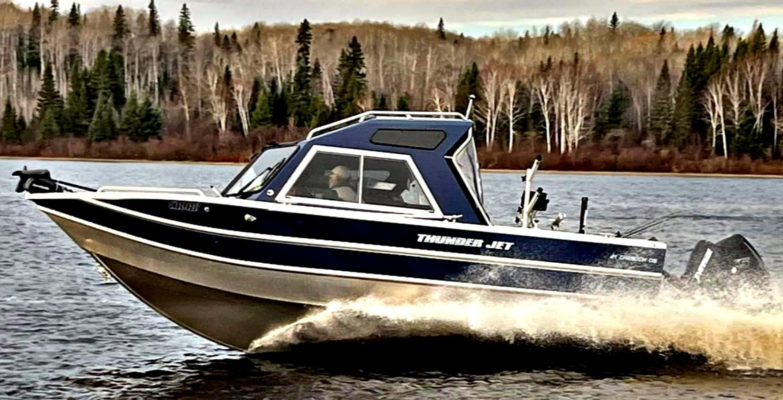
RyTek Marine's ThunderJet Chinook
Full of RyTek Gear, this is our personal boat. At home on the Great Lakes and also the smaller inland lakes of Ontario, we use it for most of our Prototyping and R&D as well as fishing with our family and customers and clients
-
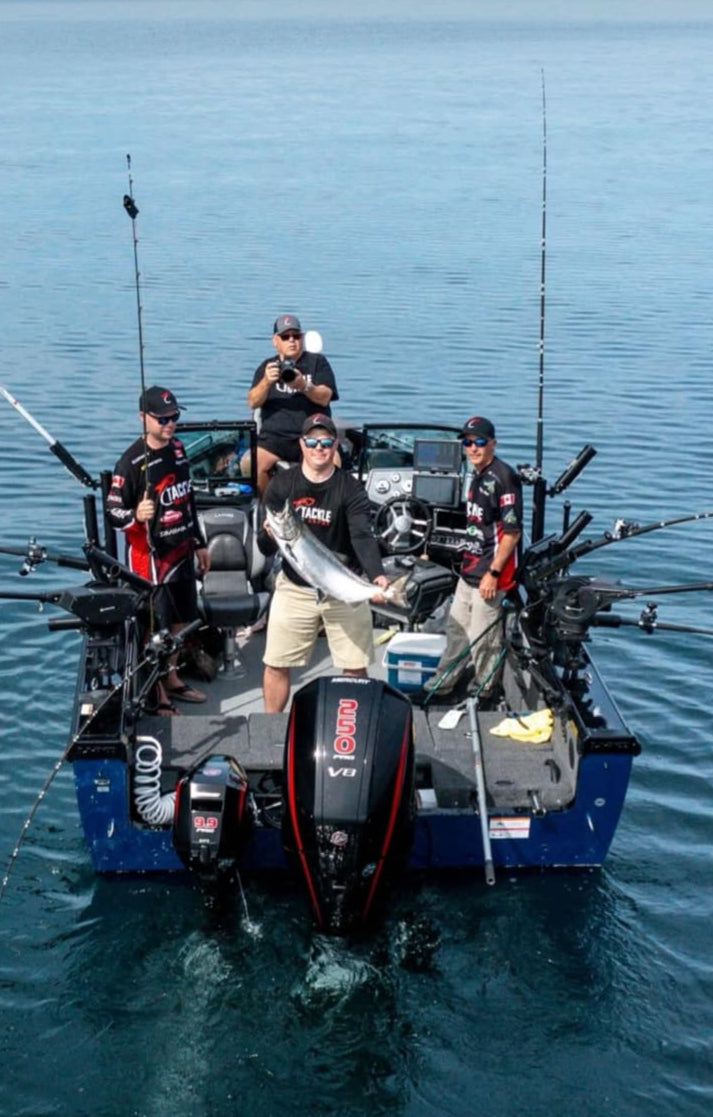
Capt. Greg Amiel
Greg Amiel of Fishing4Tails is a Multi-Species Guide out of Ontario. Spending 150+ Days on the water for everything from Salmon on Lake Ontario to Trophy Walleye on the Bay of Quinte, Greg depends on quality products on his Lund Tyee and runs a variety of RyTek Marine Transducer Mounts and Gimbal Mounts! Visit his website at www.fishing4tails.com
-
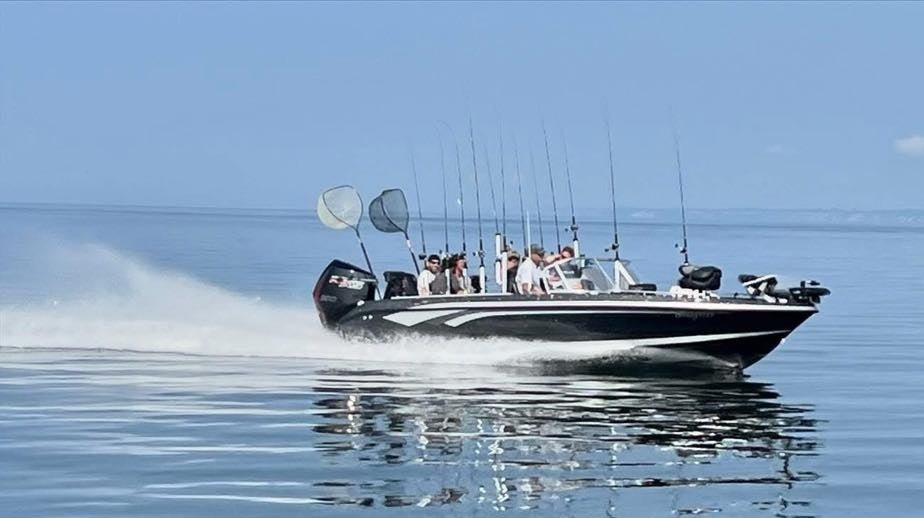
Capt. Rob Jones
Located in Southwestern Ontario, Rob Jones of One More Pass Sportfishing spends many days thru the year all across the Province of Ontario and into the surrounding States. With his 621 Ranger and many RyTek Marine products, he targets Walleye, Salmon and many other game fish whenever he get out on the water!
-
Marvin Marner
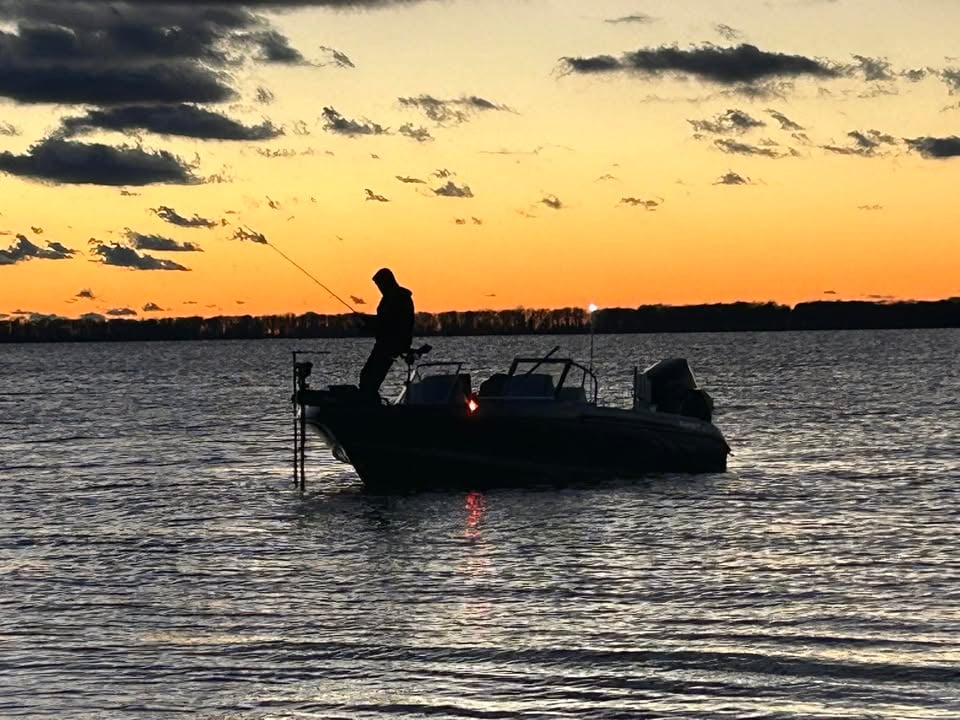
Marvin Marner is a tournament angler that fishes multiple tournament circuits on Lake Erie waters, Airmar TM185, Lowrance Active Imaging HD, and Multiple 3600 FFS mounts are some of the RyTek Marine products mounted to his Ranger 622, "The ability to fine tune my 2D sonar to mark fish at any speed, then circle back to target them with a fine-tuned FFS is a huge part of my success".
-

Lets See Your Ride!!!
Are you a RyTek Marine Customer? Send in your photo's of your boat and a short description of your self and why RyTek products help you to Up Your Sonar Game!!!
-
Casey Williams
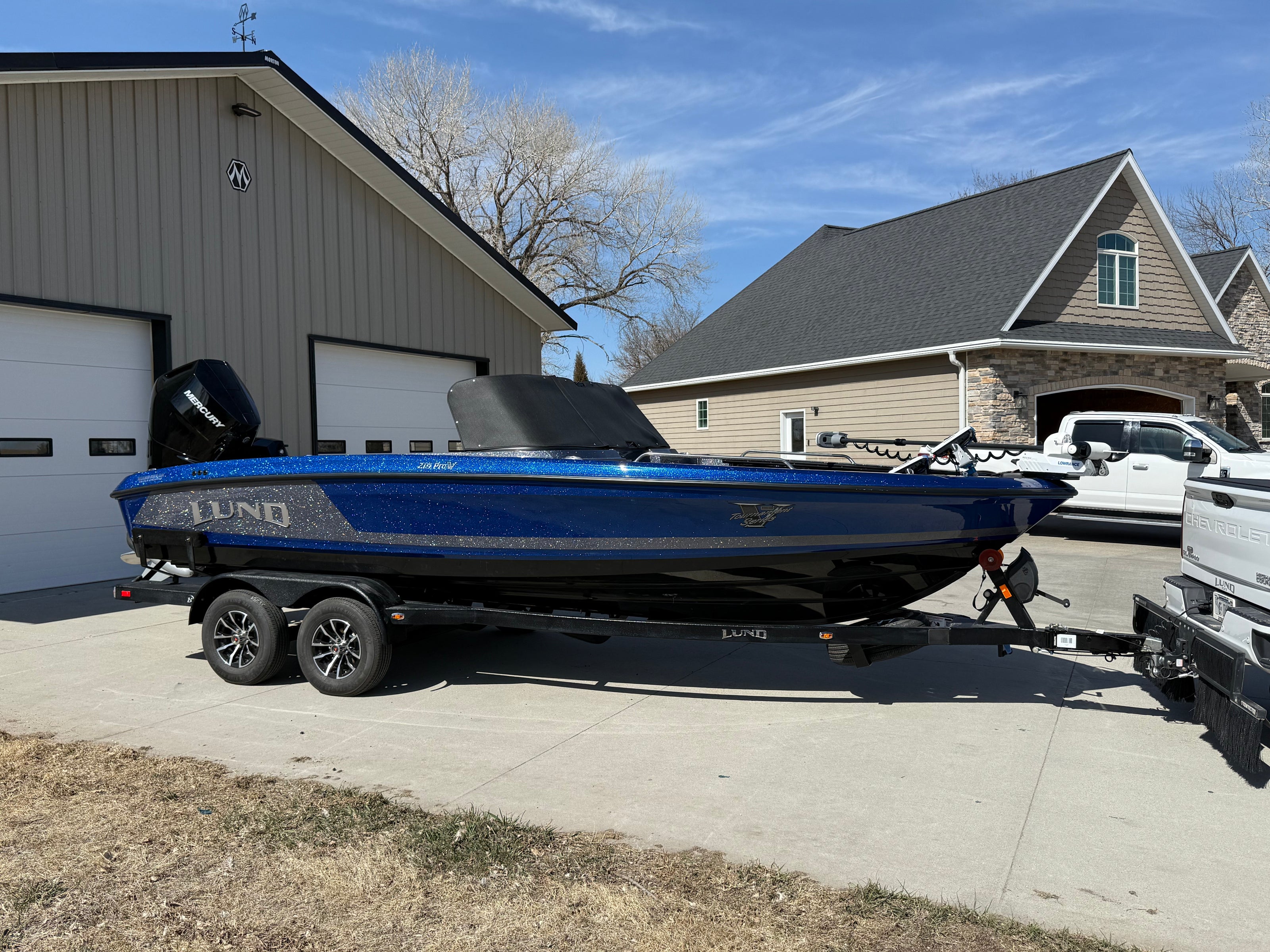
I’ve been fishing pretty much my whole life. I started fishing local tournaments in Nebraska in 2007 and in 2016 tried my first season in the Masters Walleye Circuit. I’ve qualified for the World Walleye Championship 4 times since 2019 with a 3rd place finish in the 2020 Championship. I’ve used RyTek Marine products on my last 3 boats and don’t plan on rigging with anything else!! The 3600 FFS mounts are the easiest and best built aftermarket mounts out there in my opinion.
